How Do Tarantulas Eat? The Surprising Process
Watching your eight-legged friend take down a feeder insect is one of the most exciting parts of keeping arachnids. If you have ever watched closely, you might wonder: how do tarantulas eat? Tarantulas cannot chew or swallow solid food, so they liquefy their prey outside their bodies using venom and digestive juices, then drink the resulting nutrient-rich soup.
While it looks like a spider is chewing on a roach or cricket, the real mechanism is entirely different. It is a slow, fascinating ritual of chemical breakdown. Let us walk through the mechanics of tarantula feeding, step by step.
How Do Tarantulas Eat Their Food Step by Step?
Tarantulas eat their food through a biological process called external digestion, which liquefies prey before any ingestion happens. The spider subdues prey with its fangs, pumps digestive enzymes into the body of the insect, and uses its sucking stomach to drink the dissolved tissues.
When a tarantula strikes, its powerful chelicerae drive downward to pin the prey. Hollow fangs inject venom that quickly subdues the feeder insect. Once the prey stops moving, the spider regurgitates digestive fluids from its midgut directly onto and inside the prey item.
These enzymes dissolve muscle, fat, and organs into an easy-to-drink broth. As the tissues break down, the tarantula uses its muscular stomach to draw the fluid into its mouthparts. Hair fringes around the mouth act like a fine filter, keeping solid bits of chitin out of the digestive tract.
What Is a Food Bolus?
A food bolus is the tiny ball of dry, inedible exoskeleton left behind after a tarantula finishes drinking its meal. Because spiders cannot break down hard chitin, they mash the remains into a dense ball and discard it in a corner of their enclosure. As a responsible keeper, you should remove these boluses with long tweezers to prevent mold growth in the habitat.
How Do Tarantulas Catch Prey Without Good Eyesight?
Tarantulas catch prey by detecting vibrations through sensitive body hairs and slit sensilla rather than relying on their eyesight. Most species have eight small eyes that only distinguish between light and dark, so they wait for footsteps to reveal a meal.
Fine sensory hairs called trichobothria cover the legs and body. These hairs pick up microscopic air currents and surface tremors created by an approaching insect. Ground-dwelling species often feel footsteps through the substrate, while arboreal species detect movement along bark and webbing.
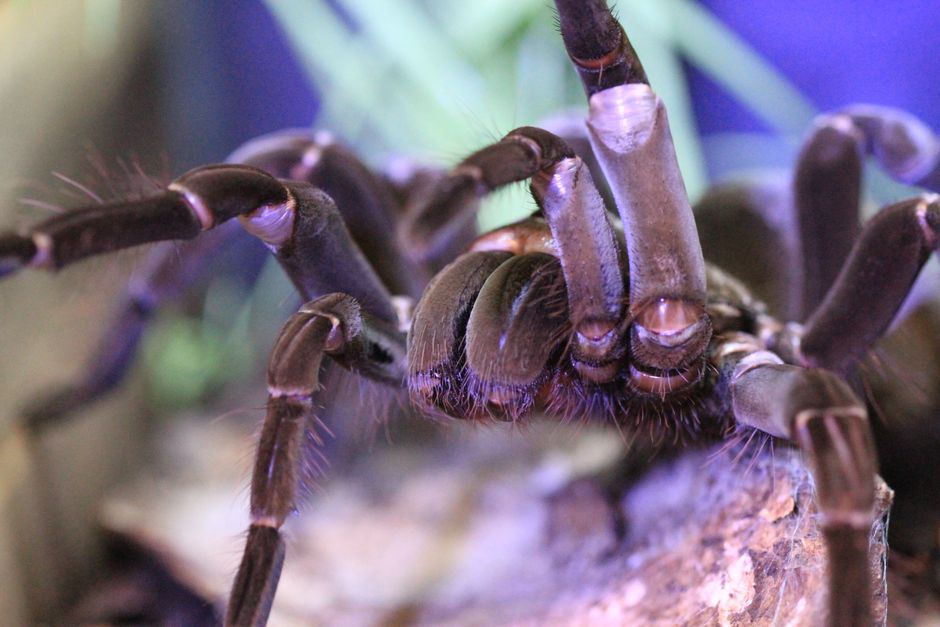
Many species lay down trip lines of silk around their burrow entrance. When a cricket walks across these silk strands, the vibrations alert the spider inside. In a fraction of a second, the tarantula rushes out, grabs the target, and drags it back into hiding. If you keep stunning arboreal species like the Gooty sapphire ornamental tarantula, you will often see them resting on cork bark, legs spread wide to catch any slight vibration.
What Do Tarantulas Eat in the Wild and in Captivity?
Tarantulas eat live insects and other small invertebrates, though large species occasionally consume small vertebrates like frogs, lizards, and pinky mice. In captivity, a healthy diet consists primarily of gut-loaded feeder insects that match the width of the spider's carapace.
Captive pet parents have several great feeder options to keep their spiders well-nourished:
- Dubia roaches, which offer high protein, great shelf life, and do not bite or jump.
- Crickets, which are widely available and trigger a strong hunting response.
- Red runner roaches, which are active movers and ideal for fast-moving arboreal spiders.
- Mealworms and superworms, which work well as occasional treats, though you should crush their heads so they do not bite your spider or burrow into the dirt.
- Hornworms, which provide excellent hydration for adult spiders needing extra moisture.
Never feed wild-caught bugs to your pet. Wild insects often carry agricultural pesticides or parasites that can quickly kill an invertebrate. Purchase your feeders from reputable suppliers, and remember to research a species' full adult needs before buying any exotic pet to ensure you can support their dietary habits for years to come.
How Long Does It Take for a Tarantula to Finish a Meal?
It typically takes a tarantula between three to twelve hours to completely digest and consume a single prey item. Larger meals, such as adult dubia roaches, require significantly more time to break down than smaller feeder crickets.
Because the external digestion process is slow, your spider will often cradle the meal against its mouthparts for an entire afternoon or evening. You might see the tarantula slowly rotating the prey using its pedipalps. This slow kneading action helps the digestive enzymes reach every pocket of tissue inside the insect shell.
During this period, avoid disturbing the enclosure. Bumping the tank or turning on bright lights can startle the spider, causing it to drop the meal or retreat into its hide without finishing. Let your tarantula work at its own natural pace until you spot the discarded bolus.
Why Do Spiders Spin a Web Mat Before Eating?
Many tarantulas spin a small silk sheet, known as a feeding mat, on the ground before settling down to eat. This silk barrier keeps dirt and substrate from sticking to their liquefied meal as they work. It acts like a clean dining table that keeps the food tidy and prevents valuable fluids from soaking into dry soil.
How Often Should Pet Tarantulas Eat?
Pet tarantulas should eat once or twice a week as fast-growing spiderlings, while mature adults usually require a meal only once every two to three weeks. Feeding frequency depends heavily on the size of the spider, its age, and the size of its abdomen.
The abdomen is the best indicator of your spider's nutritional status. If the abdomen is rounded and about the same size or slightly larger than the carapace, your tarantula is well-fed. If the abdomen looks shriveled or small, it is time for a meal. Overfeeding can cause an overly heavy abdomen, which puts heavy terrestrial species at risk of fatal abdominal tears if they fall from low heights.
Keepers must also watch for the pre-molt stage. When preparing to shed its skin, a tarantula will refuse food for weeks or even months. If your spider rejects food, remove the live insect within twenty-four hours. Uneaten crickets can chew on a soft, defenseless tarantula during a molt and cause severe injury.
Final Thoughts
Learning how do tarantulas eat shows just how specialized and efficient these ancient arachnids really are. From sensing tiny footsteps in the dark to turning prey into liquid meals, their hunting routine is an extraordinary survival strategy. Check out our other care guides on RarePetCare to discover more fascinating facts about keeping exotic pets healthy and happy.
Frequently Asked Questions
Do tarantulas have teeth?
Tarantulas do not have teeth for chewing. They have two hollow fangs attached to their chelicerae that inject venom and digestive juices into prey.
Can a tarantula choke on solid food?
A tarantula cannot swallow solid food because its mouthparts and narrow esophagus are lined with fine hairs designed to filter out solids. Only fully liquefied nutrients can pass into its digestive tract.
Why is my tarantula leaving balls of dirt after eating?
Those balls are not dirt, but rather a food bolus made of compressed, indigestible exoskeleton remnants that the spider rolled up and discarded after extracting the fluids.
How long can a tarantula survive without food?
Healthy adult tarantulas can easily survive for several months without eating, provided they have constant access to a fresh, clean water dish.
Explore More Invertebrates Guides
 🕷️Invertebrates
Gooty Sapphire Ornamental Tarantula: Care and Facts
Discover the rare Gooty sapphire ornamental tarantula, including its vivid blue coloring, natural habitat, and essential care tips.
 🕷️Invertebrates
How Insect Declines Affect Wildlife and Habitats
A massive review of wildlife studies reveals that insect loss threatens animals far beyond just food chains, impacting shelter and defenses.
 🕷️Invertebrates
Praying Mantis Not Eating? Key Causes and Fixes
Discover why your praying mantis is refusing food, how to spot premolt signs, and what you can do to get them eating safely again.