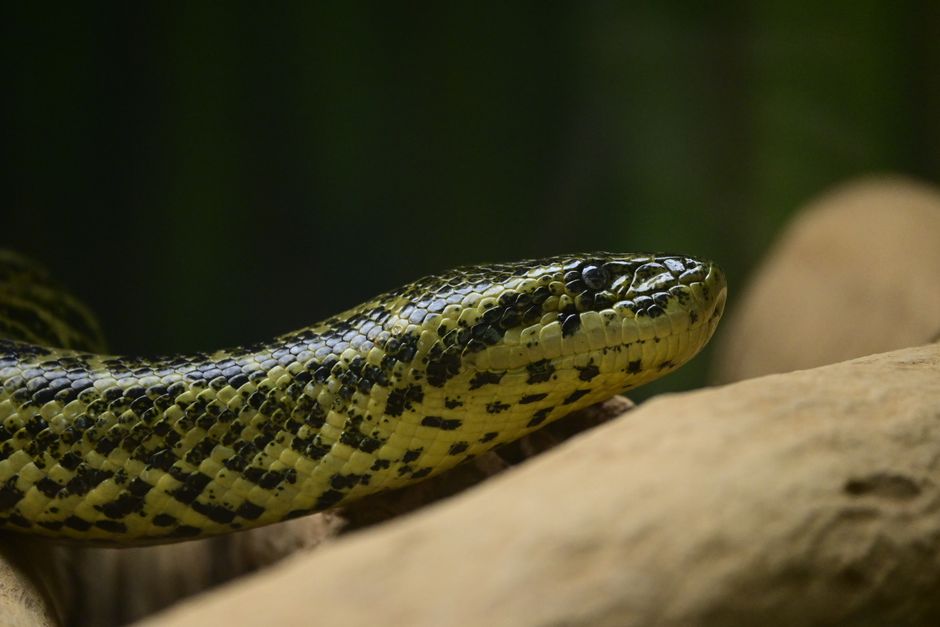
Swimming with Green Anacondas: What Science Shows
Swimming with green anacondas involves entering murky river habitats where massive wild snakes rest, feed, and mate. While popular culture depicts green anacondas as relentless man-eaters, scientific field encounters prove they are cautious ambush hunters that rarely attack large adult humans unless they feel trapped, provoked, or cornered.
When angler Jeremy Wade swam toward a massive green anaconda resting in shallow river water, millions of viewers held their breath. Swimming with green anacondas seems like an impossible dare, yet the snake did not strike. The real truth about how these giant reptiles behave underwater is far more interesting than Hollywood monster movies.
Are Green Anacondas Aggressive Toward Humans?
Green anacondas are not naturally aggressive toward humans and will almost always choose stillness or retreat over an attack when given space. They view an adult human as an unfamiliar, potentially dangerous predator rather than a standard food item. Because striking wastes energy and risks injury, anacondas rely heavily on remaining unseen.
In clear South American rivers, wild anacondas spend long periods lying on sandy beds or tangled among submerged branches. They are ectothermic animals, which means they must carefully manage their body heat and physical effort. Attacking a large creature that does not match their normal prey profile is an evolutionary gamble they usually avoid.
Much like how hatchlings rely on innate posture as explained in our guide on why baby snakes twist into spirals, adult snakes rely on deep-seated survival wiring to conserve energy. When a diver drifts past, the snake calculates whether it is in danger. If the human moves smoothly and does not block its escape route, the snake typically stays completely still.
How Anacondas React to Swimmers and Divers
Anacondas react to nearby swimmers with calm caution rather than sudden predatory lunges. They often flick their tongue to sample the chemical scents in the water, tracking the intruder's presence. If a diver gets too close, the snake will usually turn its head slowly, look for deeper water, and push itself away using its powerful tail.
Defensive strikes only occur if a swimmer steps directly onto the animal, grabs its body, or corners it in a shallow pool where it cannot swim away. Field researchers who study these reptiles regularly note that wild anacondas are remarkably calm underwater compared to when they are dragged onto dry land.
Why Swimming with Green Anacondas Is Possible
Swimming with green anacondas is possible because these heavy-bodied snakes are specialized ambush predators that rely on surprise rather than high-speed pursuit. Once an anaconda knows it has been spotted, its primary hunting advantage is completely gone. Without the element of surprise, the snake shifts from hunting mode into self-defense mode.
When television presenters and wildlife photographers enter the water with anacondas, they follow strict safety guidelines based on snake biology. Understanding these natural limitations helps explain why these peaceful underwater encounters can happen:
- Ambush dependency: Anacondas hunt by lying motionless along riverbanks to strike passing mammals, not by actively chasing swimming targets in open water.
- Prey size recognition: Adult humans have broad shoulders that make swallowing extremely difficult for even the largest constrictors.
- Metabolic conservation: Striking and constricting requires huge bursts of anaerobic muscle power, which tires a cold-blooded snake very quickly.
- Water buoyancy: In water, an anaconda feels agile and secure, which makes it far less defensive than when it is exposed on land.
Before ever thinking about swimming with green anacondas or any large wild constrictor, professionals evaluate water clarity, river current, and the snake's recent feeding status. A snake that has recently eaten a large meal is sluggish, heavy, and even less interested in moving or defending itself.
How Big Do Green Anacondas Really Get?
Wild green anacondas typically reach lengths between 15 and 17 feet, with exceptionally large females reaching up to 20 feet and weighing well over 200 pounds. While folk stories and old river legends claim encounters with 30-foot monsters, no scientific survey has ever verified a living specimen of that size.
Female green anacondas are significantly larger than males, displaying extreme sexual dimorphism. During breeding season, multiple smaller males form a mating ball around a single giant female. These massive females require huge calories, feeding on capybaras, caimans, deer, and large aquatic birds in their native wetland basins.
Size Myths vs Verified Records
The myth of giant man-eating snakes often stems from people misjudging objects underwater, where light refraction makes animals appear roughly 25 percent larger than they really are. Shed skins also stretch dramatically, leading hunters and travelers to report inflated numbers that do not hold up under scientific measurement.
Just as seen in clashes like mongoose vs python fights, large constrictors carry serious physical bulk, yet their real-world capabilities are often exaggerated by fiction. For any reptile enthusiast considering large constrictors as companions, always research a species' full adult size and dietary demands before bringing one home, and build an enclosure that meets their complex environmental needs.
What Makes Aquatic Ambush Predators Tolerant of Observers?
Aquatic ambush predators tolerate observers because swimming burns massive amounts of oxygen and energy that cold-blooded animals cannot afford to waste on non-prey items. As long as a human stays calm, avoids cornering the snake, and does not touch its head, the anaconda treats the diver as neutral background presence.
Water also dampens vibration and allows the snake to feel confident in its escape paths. On land, a green anaconda feels heavy, slow, and vulnerable, which often makes it hiss loudly, strike, and emit foul musk. Submerged in its natural element, the snake regains full control of its buoyancy and swimming power.
This comfort level allows quiet human observers to float alongside them without triggering defensive strikes. Biologists use this calm behavior to count parasites, record scale patterns, and document wild behaviors without causing chronic stress to the snake.
Final Thoughts
Understanding real snake biology shows why swimming with green anacondas often ends quietly rather than in an attack. Respecting these magnificent apex predators in the wild helps replace monster myths with genuine ecological appreciation. Explore more RarePetCare guides to learn about fascinating reptile behaviors, wild habitats, and responsible captive pet care.
Frequently Asked Questions
Has a green anaconda ever eaten a human?
There are no scientifically confirmed records of a green anaconda eating a human in the wild. While an exceptionally large specimen has the physical strength to constrict a person, adult human shoulders make swallowing nearly impossible for the snake.
How long can a green anaconda stay underwater?
A green anaconda can stay submerged for up to ten minutes while actively swimming. When resting quietly on a riverbed to conserve oxygen, it can remain underwater for much longer periods.
Can green anacondas breathe underwater?
No, green anacondas are reptiles with lungs and must surface to breathe air. Their nostrils and eyes are positioned high on top of their heads so they can breathe while keeping the rest of their body hidden.
Do green anacondas make good pets?
Green anacondas make very challenging pets that are only suited for experienced professional facilities. Their massive adult size, high humidity requirements, and heavy dietary needs make proper home care extremely difficult for ordinary hobbyists.
Explore More Reptiles Guides
 🦎Reptiles
Why Baby Snakes Twist Into Spirals in Eggs
Discover the biological forces that make snake embryos curl into tight coils long before they ever move on their own.
 🦎Reptiles
Bobcat vs Rattlesnake: How Bobcats Hunt Them
Camera trap photos captured a rare bobcat vs rattlesnake faceoff, showing how agile wildcats take down heavy venomous snakes.
 🦎Reptiles
Two-Headed Turtle: Causes, Survival, and Care
Discover what causes a two-headed turtle to hatch, the survival hurdles they face, and how caretakers support these rare hatchlings.