Why Is the Brown Treesnake So Successful on Guam?
The brown treesnake is one of the most widely discussed species in wildlife management and reptile hobby circles today. If you have been reading about invasive species or unusual tree-dwelling reptiles, you might wonder how this creature expanded so rapidly across new environments. Originally native to northern coastal Australia, eastern Indonesia, Papua New Guinea, and islands in northwestern Melanesia, this distinct snake has made a significant impact far beyond its home territory.
What Makes the Brown Treesnake Such a Successful Invasive Species?
The brown treesnake is an extremely adaptable predator that can thrive in new habitats even when starting from a small population with low genetic variation. After arriving on the island of Guam in the 1940s, likely through military cargo, this species quickly established itself across the entire island. Without natural predators to keep its numbers in check, the population grew rapidly over the following decades.
Most animal populations struggle to survive when introduced to a new location with limited genetic diversity. Genetic bottlenecks often lead to health issues and reduced breeding success over time. However, this snake managed to overcome those biological hurdles and spread across every corner of Guam.
How Limited Genetic Diversity Affects Exotic Snakes
When a small group of animals colonizes a new area, the limited gene pool can make the population vulnerable to diseases or environmental changes. Scientists have studied the Guam population extensively to figure out how these reptiles bypassed those usual genetic weaknesses. Their ability to flourish despite low genetic diversity continues to offer important insights for wildlife biologists studying invasive reptiles.
Is the Brown Treesnake Venomous or Dangerous to Humans?
Yes, the brown treesnake is mildly venomous, but it is generally not considered dangerous to adult humans. Because it is a rear-fanged species, it must chew on its target to deliver venom rather than striking and injecting venom instantly like a viper. In adult humans, a bite typically causes local swelling or irritation rather than serious medical emergencies.
For smaller pets and wildlife, however, the mild venom is effective enough to quiet prey quickly. If you are interested in keeping specialized reptiles at home, always consult an exotic animal veterinarian and research their specific housing security needs to ensure the safety of both your pet and your local environment.
How Rear-Fanged Snake Bites Work
Rear-fanged snakes have grooved teeth located near the back of their upper jaw. Venom flows down these grooves into the wound while the snake holds onto its prey. This venom delivery system is designed primarily for subduing small birds, lizards, and mammals rather than self-defense against large creatures.
How Large Does a Brown Treesnake Grow?
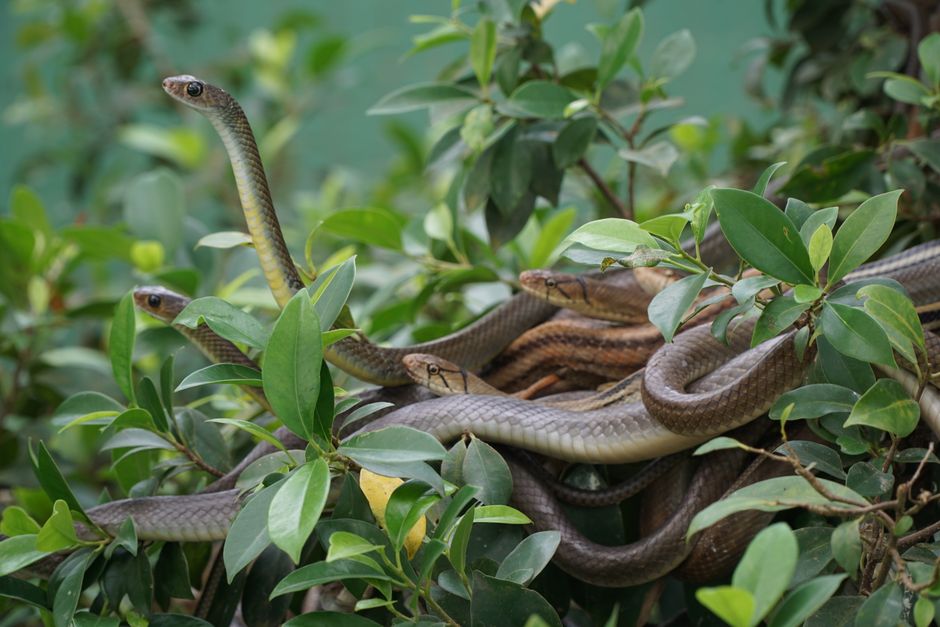
An adult brown treesnake can grow up to two meters in length, making it a relatively long and slender reptile. Their long body structure allows them to move easily through forest canopies and climb steep surfaces with remarkable agility. Because they are mostly active at night, they use their keen senses to locate sleeping prey high up in tree branches.
Their physical appearance typically features a brownish or yellowish body with subtle pattern markings that help them blend into tree bark and foliage. Their slender frame conceals powerful muscular control, which helps them hold onto branches while reaching across wide gaps in the forest canopy.
What Impact Has the Brown Treesnake Had on Native Wildlife?
The brown treesnake has caused severe declines in native bird and reptile populations on the island of Guam. Before the arrival of this nocturnal tree climber, native species on the island had evolved without any predators capable of hunting them in the trees at night. As a result, native forest birds and small lizards had no natural defense mechanisms against the snake.
Over the decades, several native bird species disappeared entirely from the island, while local reptile populations suffered heavy losses. This ecological shift has changed the natural food web on Guam, illustrating how much damage a single introduced species can cause when left unchecked in a fragile ecosystem.
Final Thoughts
Understanding how the brown treesnake thrives on Guam offers valuable lessons about animal adaptability and ecosystem balance. For pet parents interested in unique reptiles, this species serves as a clear reminder of why secure enclosures and responsible ownership are so important. Always research exotic animals carefully to help protect native habitats in your own region.
Frequently Asked Questions
Where is the brown treesnake originally native to?
The brown treesnake is native to northern coastal Australia, eastern Indonesia, Papua New Guinea, and islands in northwestern Melanesia.
What do brown treesnakes eat in the wild?
In their natural habitat, brown treesnakes eat small birds, bird eggs, lizards, and small mammals.
Are brown treesnakes active during the day or night?
Brown treesnakes are nocturnal animals that hunt primarily after sunset.
When were brown treesnakes introduced to Guam?
Brown treesnakes were introduced to the island of Guam during the 1940s, likely transported by cargo ships or planes.
Explore More Reptiles Guides
 🦎Reptiles
Marine Iguana: The Ocean-Feeding Lizard
Meet the marine iguana, the only lizard on Earth that dives into cold ocean waters to graze on underwater algae.
 🦎Reptiles
Hawksbill Sea Turtle Endangerment: What Happened
Learn the primary causes of hawksbill sea turtle endangerment, the history of the tortoiseshell trade, and how to protect them today.
 🦎Reptiles
Longest Wild Snake Ever Found: A Record Python
A record-setting giant reticulated python discovered in Indonesia reveals how large wild snakes can grow in undisturbed rainforests.