Alligator at Orlando Airport: Why Runways Attract Them
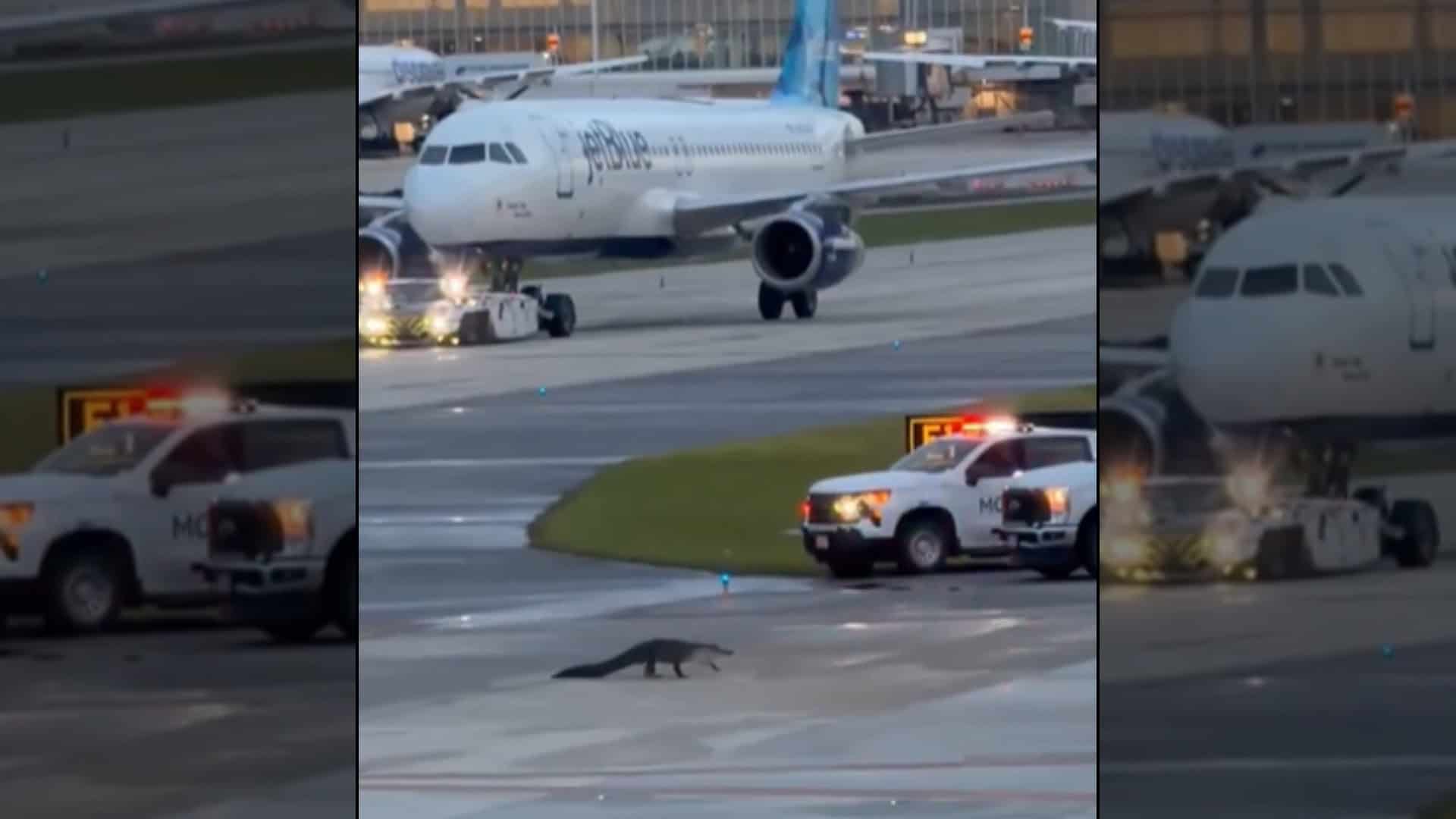
A passenger jet idles on the tarmac while flashing amber lights surround an unbothered reptile casually crossing the wet pavement. Seeing an alligator at Orlando airport might look like an internet prank, but it is an actual, recurring event for ground operations in Central Florida. An alligator at Orlando airport happens when a native crocodilian travels between the retention ponds, canals, and natural wetlands that surround the airfield in search of food, mates, or warmth.
These animals do not care about flight schedules or passenger itineraries. When rain pours and pavement heats up, Florida wildlife moves across whatever open ground lies in its path. Understanding why these prehistoric animals wander onto active airfields helps demystify one of the weirdest travel delays in aviation.
Why Does an Alligator at Orlando Airport Show Up on the Runway?
An alligator at Orlando airport shows up on the runway because the entire airfield complex was built directly over a low-lying wetland basin filled with connected water retention ponds. Orlando International Airport covers thousands of acres, and much of that property consists of undeveloped woods, grassy clearings, and stormwater reservoirs.
Alligators live in nearly every freshwater body across Central Florida. When young males seek new territory, or when adult animals begin roaming during spring breeding season, they walk overland between bodies of water. A long, flat concrete landing strip simply looks like a dry clearing connecting two swamps.
Heavy tropical rainfall also pushes reptiles out of overflowing drainage ditches. Flooding gives them temporary water routes that lead directly toward paved aprons, taxiways, and terminal gates. Once the rain stops, the animal finds itself stranded on open asphalt without immediate water cover.
Pavement as a Giant Basking Rock
Like all reptiles, alligators are ectothermic, meaning they cannot produce their own internal body heat. They rely entirely on their environment to regulate their core temperature and fuel their digestion.
Dark asphalt and airport concrete soak up radiant heat all day long. For an alligator that spent the morning in cool ditch water, an open runway functions just like an enormous sun-baked rock. The reptile stretches out flat against the surface to absorb warmth, completely unaware that a commercial jetliner wants that same stretch of ground.
How Do Ground Crews Handle an Alligator on Runway Grounds?
Ground crews handle an alligator on runway grounds by immediately halting aircraft movement in the affected area, setting up vehicle barriers, and calling certified wildlife specialists to remove the reptile. Flight safety always comes first, so air traffic control directs planes away from the path of the animal until wildlife officers arrive.
Airport operations teams do not attempt to grab or wrestle large wild reptiles on their own. Instead, they position their service trucks with flashing lights to track the animal, keep it in sight, and block it from advancing toward active engine intakes or landing gear.
Just as curious hikers often wonder can you pet a snapping turtle when finding one near a pond, passengers looking out airplane windows are often tempted to treat native reptiles like friendly attractions. In reality, large wild crocodilians possess lightning speed and tremendous bite force, requiring professional management.
When an alligator pauses on active tarmac, airport teams typically carry out a standard set of safety actions:
- Ground controllers hold or reroute any taxiing aircraft clear of the active taxiway.
- Operations trucks form an illuminated perimeter around the animal to prevent it from vanishing into grassy infields.
- Trained wildlife management technicians or state-licensed trappers secure the animal using specialized capture poles and tail ropes.
- The reptile is loaded into an animal transport container and safely removed from the secure airfield perimeter.
Are Alligators Common at Other Florida Airports?
Yes, alligators are common at multiple Florida airports because major aviation facilities throughout the state sit adjacent to massive coastal and river basin wetlands. Airfields in Tampa, Miami, Fort Lauderdale, and Jacksonville have all recorded alligators walking across access roads, ramps, and perimeter grounds.
Florida is home to well over one million alligators. Because airports require vast flat spaces with extensive stormwater infrastructure to keep runways dry, they naturally feature the exact retention ponds that native crocodilians love to inhabit. As long as airfields maintain open ponds to manage hurricane runoff, alligators will live along their edges.
As an important welfare reminder, wild crocodilians have complex biological requirements, territorial instincts, and critical legal protections. They should never be approached, fed, or handled by the public, and they can never be kept casually as pets without specialized commercial permits and proper lifelong facilities.
What Airport Wildlife Teams Do to Prevent Reptile Incursions
Airport wildlife teams prevent reptile incursions by maintaining reinforced perimeter fencing with buried wire barriers, clearing heavy brush near taxiways, and managing aquatic food sources in drainage canals. Keeping wild animals off the airfield is a federal aviation requirement designed to protect both the wildlife and traveling passengers.
Perimeter fences around Florida airfields often feature chain-link fabric sunk deep into the soil. Alligators are capable diggers and climbers, so crews constantly inspect these fence lines for washouts, burrow holes, or bent fabric caused by storms.
Managing Airport Drainage and Wetland Habitats
Airports work directly with wildlife biologists to make on-site drainage areas as unattractive to hunting reptiles as possible. Deep retention ponds with steep banks give alligators fewer easy spots to climb out and sunbathe near active taxiways.
Teams also control vegetation, clearing reeds and thick shoreline weeds where alligators prefer to build nests or hide while stalking prey. When individual animals grow too large or consistently wander close to operations areas, airport wildlife managers capture and relocate them to remote state-approved habitats far from jet noise and moving landing gear.
Final Thoughts
Spotting an alligator at Orlando airport is a wild reminder that Florida transit hubs share their environment with resilient native species. With strict wildlife protocols, alert ground teams, and fast containment responses, both airplanes and roaming crocodilians stay out of harm's way. Take a look at our other RarePetCare guides to discover more fascinating facts about reptile behaviors, safe observation practices, and responsible exotic animal care.
Frequently Asked Questions
Can an alligator damage a commercial airplane?
Yes, colliding with an alligator during high-speed takeoff or landing can damage aircraft tires, brake assemblies, or nose gear. Ground controllers stop aircraft movement until the animal is safely removed.
What happens to alligators caught at Orlando airport?
Certified wildlife trappers capture the reptile and either relocate it to an approved wild habitat or process it according to state wildlife agency guidelines depending on its size and health.
Why don't fences keep alligators off airport runways completely?
Alligators can climb chain-link fences and dig underneath soft Florida sand, especially during heavy rainstorms that erode drainage banks along the perimeter.
What time of year do alligators wander most near Florida airfields?
Alligators wander most between April and June, which marks their spring courtship and mating season when both males and females travel overland to find new territory.
Explore More Reptiles Guides
 🦎Reptiles
Bearded Dragon Shedding: Signs, Timeline, and Care
Learn how to spot bearded dragon shedding signs, handle stuck skin safely, and keep your reptile comfortable throughout the molting process.
 🦎Reptiles
Diego the Tortoise: How One Reptile Saved His Species
Discover how Diego the tortoise fathered over 800 offspring to rescue the Española giant tortoise from the brink of extinction.
 🦎Reptiles
Pig-Nosed Turtle Status: Threats and Papua Rescue Plan
Discover why the pig-nosed turtle faces severe threats in Papua and what conservationists are doing to protect this unique river species.