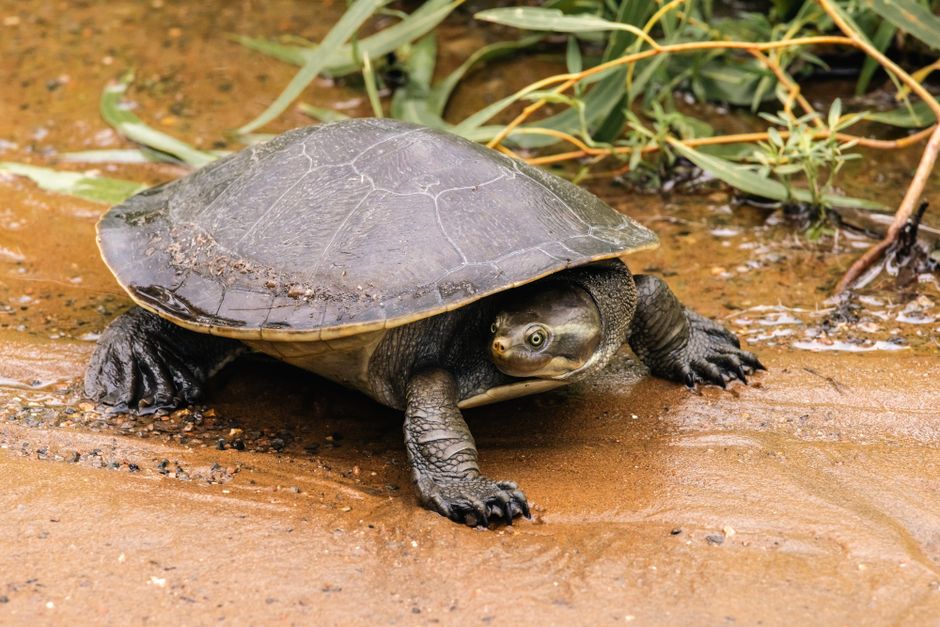
Long-Necked Turtle Drought Survival: Mud Rescue
Australian long-necked turtles face harsh environmental shifts when shallow freshwater waterways suddenly dry up. Long-necked turtle drought survival is the biological and behavioral strategy where these reptiles bury into damp mud to slow their bodies down and retain water until rain returns. When water management decisions drain wetlands too quickly, this ancient defense mechanism breaks down, putting entire populations at risk of being entombed alive.
How Long-Necked Turtle Drought Survival Works in the Wild
Australian long-necked turtles survive seasonal dry periods by burying themselves in deep, soft wetland sediment and entering a dormant state known as estivation. During this time, the turtle lowers its metabolic activity, stops eating, and relies on stored body water to remain alive for weeks or months at a time.
These unique reptiles possess flexible necks that fold sideways under the shell rather than retracting straight backward. When water levels drop naturally, their instincts urge them to seek out the deepest mud holes available. They burrow downward using their webbed feet and paddle-like limbs, pushing mud over their carapaces until only the tip of the snout or tiny air pockets connect them to the surface air.
By burying beneath the wet sediment, the turtle escapes the scorching sun and drying winds above. The surrounding damp soil insulates the animal against temperature extremes. As long as the mud remains moist, moisture loss stays low enough for the animal to wait patiently for seasonal rainfall to refill the wetland basin.
The Biological Process of Estivation
Estivation is the warm-weather equivalent of winter brumation, designed specifically to prevent fatal dehydration. The turtle slows its heart rate and respiration, burning minimal calories while waiting out the dry spell.
During estivation, waste processing slows down inside the turtle to conserve every drop of fluid. The reptile will not produce normal waste, keeping its internal moisture locked in vital organs. Once natural rainfall soaks the ground and refills the pool, the turtle absorbs moisture through its skin and digs its way back into open water.
What Happens When Wetland Water Is Cut Off Suddenly?
When an agency or environmental authority cuts off water flow abruptly, the wetland ecosystem collapses within days rather than transitioning over months. The sudden lack of water causes the top layer of mud to bake, shrink, and harden into a dense crust before turtles can adjust or burrow to safe depths.
Under normal seasonal conditions, water evaporates gradually over many weeks. This slow retreat gives aquatic wildlife ample warning to migrate to permanent river channels or settle into suitable estivation pockets. When human action stops the flow overnight, the turtles are caught completely off guard in shallow margins.
The rapid drainage affects every resident in the aquatic food web. Key aquatic species perish alongside the reptiles, including the male water bug carrying eggs on its back and various native fish. Without water to cushion the soil, the sun transforms rich wetland sediment into solid brick, sealing anything beneath it under an airtight layer of clay.
Trapped turtles can quickly suffer from extreme heat stress. Because they cannot dig their way through hardened ground, they use up their limited moisture reserves trying to escape, leading to fatal dehydration in a matter of days.
Why Scientists Had to Dig Turtles from the Mud
Scientists had to physically dig these turtles out of the mud because the rapid loss of water turned the wetland bed into an inescapable trap. Without human intervention with hand tools and rescue buckets, every buried turtle in the drained zone would have perished beneath the sunbaked soil.
Biologists and field rescue volunteers walked grid patterns across the cracked terrain, searching for subtle clues hidden in the clay. Rescuing an animal buried in hardening earth requires patience and delicate technique to avoid fracturing the turtle shell underneath.
Rescue workers typically follow a careful process to safely retrieve trapped wildlife from drying riverbeds:
- Locating tiny air fissures and slight dome-shaped mounds that signal a buried shell underneath.
- Applying small amounts of water around the perimeter to soften the hardened clay crust.
- Excavating the packed soil by hand and with blunt wooden tools rather than sharp metal spades.
- Gently lifting the turtle free while supporting the plastron and checking the eyes and mouth for caked dirt.
- Transporting the rescued animals in damp, shaded bins to rehabilitation centers for monitored rehydration.
Each turtle recovered during this emergency rescue showed signs of stress, dry skin, and lethargy. Field teams placed the turtles into specialized holding areas where fluids could be restored slowly without shocking their internal systems.
What Field Rescues Teach Us About Pet Turtle Care
Field mud rescues demonstrate just how quickly moisture loss and environmental instability can harm freshwater reptiles. In a home enclosure, maintaining stable aquatic parameters, clean water, and access to proper hydration is vital to keeping pet turtles healthy.
Many captive freshwater turtles, including side-necked and long-necked species, share these same biological instincts. If an indoor enclosure dries out, or if the water quality deteriorates, pet turtles experience severe stress. They may attempt to burrow into whatever substrate is available, signaling that their environment is missing proper moisture balance.
Dehydration in captive reptiles can develop silently before symptoms become obvious to the owner. Signs of dehydration include sunken eyes, wrinkled or flaky skin, loss of appetite, and difficulty swimming evenly. Providing a secure aquatic area with gentle filtration, alongside an easily accessible dry basking dock, allows your pet to choose its own balance of water and warmth.
As a responsible pet parent, always research a species full adult size and habitat requirements before bringing one into your home. If your turtle ever shows signs of persistent lethargy, shell softening, or refuses to leave the dry area of its tank, consult an exotic-animal veterinarian promptly for targeted treatment.
Final Thoughts
Witnessing long-necked turtle drought survival in the wild shows both the tough resilience of these prehistoric animals and the fragile nature of their wetland homes. When sudden habitat loss threatens them, swift human action can mean the difference between local extinction and survival. Keep reading RarePetCare guides to learn more about reptile welfare and proper care habits for extraordinary species.
Frequently Asked Questions
How long can a long-necked turtle survive buried in mud?
A healthy long-necked turtle can survive in damp mud for several months by slowing its metabolism through estivation. However, if the mud dries out completely and bakes in direct sunlight, the turtle can dehydrate and perish within a few days.
Do Australian long-necked turtles leave the water during dry spells?
Yes, Australian long-necked turtles often travel overland in search of deeper water when their home pond dries up. If they cannot locate another body of water, they will burrow into damp soil or leaf litter to wait for rain.
What is the difference between estivation and hibernation in turtles?
Hibernation, or brumation in reptiles, occurs during cold winter months to survive freezing temperatures. Estivation happens during hot, dry periods to prevent water loss and protect the turtle from intense heat.
Can pet long-necked turtles estivate in home aquariums?
Pet turtles should not estivate in home setups because stable water and food supplies remove the need for dormancy. If a captive turtle burrows and stops eating, it usually points to poor water quality, incorrect temperatures, or an underlying health issue.
Explore More Reptiles Guides
 🦎Reptiles
Naming a New Snake Species: Why It Took 7 Years
A scientist waited seven years to name a rare Ethiopian snake, balancing animal welfare and reptile taxonomy along the way.
 🦎Reptiles
Snakes in Hawaii: Pet Laws and Penalties Explained
Learn why snakes in Hawaii are strictly illegal, the heavy penalties violators face, and how the state reptile amnesty program works.
 🦎Reptiles
How Long Can You Leave a Snake Alone? Safe Travel Guide
Planning a trip? Learn how long you can safely leave your pet snake alone, key enclosure checks, and when you must hire a pet sitter.