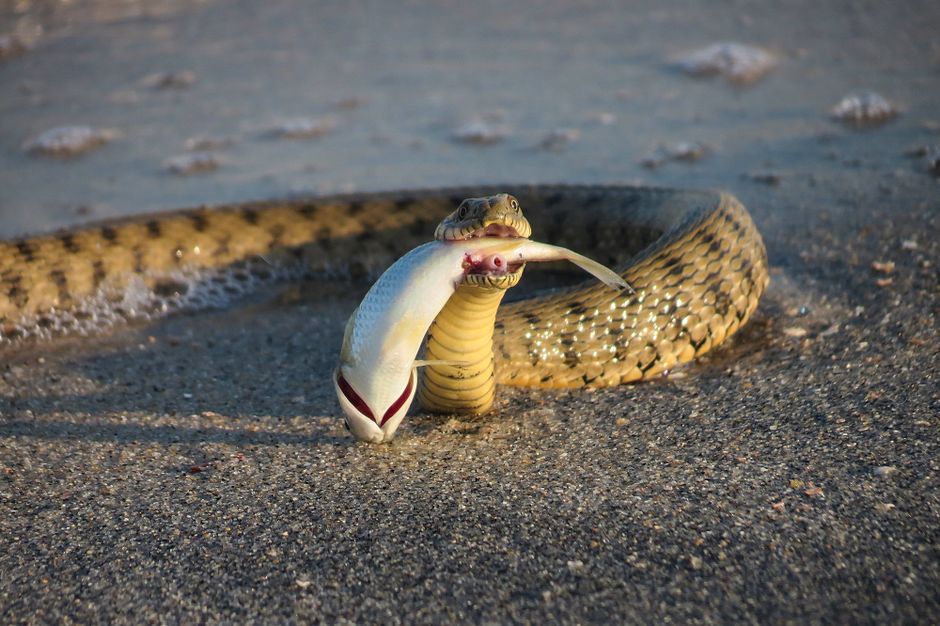
Cartwheeling Snake: How This Wild Reptile Escapes
When people imagine reptiles in a hurry, they usually picture a fast crawl or an aggressive strike. A cartwheeling snake changes that expectation completely by launching its slender body into continuous, forward somersaults across open terrain.
A cartwheeling snake is a small reptile that escapes predators by coiling its body and launching itself into repetitive aerial flips. Rather than slithering through ground cover, the animal converts its entire length into a moving wheel, reaching impressive speeds to outpace surprised hunters in dense tropical forests.
What Is a Cartwheeling Snake?
A cartwheeling snake is a reptile that avoids danger by throwing its coiled body into continuous somersaults across the ground. Researchers documented this behavior in the dwarf reed snake, a tiny nocturnal species native to parts of Southeast Asia that spends most of its life buried in leaf litter.
Scientists had heard anecdotal reports of rolling reptiles for decades from local villagers and field biologists. Formal confirmation came when researchers observed an adult dwarf reed snake actively cartwheeling down a hilly road to evade capture. The animal completed multiple rolling cycles in just a few seconds, moving far faster than it could have moved by simple slithering.
Dwarf reed snakes are modest in size, often measuring under ten inches in length. They have smooth scales, small heads, and blunt tails adapted for pushing through loose soil and rotten wood. Because they are shy and spend daylight hours hidden from sight, few people ever encounter them in their natural habitat.
Their secretive nature makes the rolling defense all the more surprising. When exposed in the open, a dwarf reed snake cannot rely on venom or heavy body mass to intimidate an attacker. Instead, it relies on speed, confusion, and sudden kinetic energy to save its life.
How Does the Snake Perform a Cartwheel?
The snake performs a cartwheel by tucking its body into an S-curve, pushing off the substrate with its tail, and flipping forward in a complete rotation. By repeating this motion several times in rapid succession, the reptile creates a continuous rolling motion along the ground.
High-speed video analysis revealed that the reptile does not simply tumble down hills by accident. It generates its own forward momentum, allowing it to roll across flat dirt surfaces and even uphill sections of trail. The movement requires coordinated muscle contractions that throw the tail and midsection over the head in an athletic arch.
The Mechanics of the Rolling Escape
To initiate the roll, the snake folds its neck and pushes its rear coils against the ground. This initial thrust lifts the front half of the snake into the air, creating a circular loop. As the body comes down, the rear section follows through, resetting the position for the next hop.
The physical coordination required for this move is remarkable:
- The snake keeps its head relatively stable to maintain spatial orientation during the tumble.
- Muscular arches along the spine absorb the impact each time the body hits the dirt.
- Rhythmic tail thrusts supply continuous power so the roll does not lose momentum.
- The entire sequence takes only a fraction of a second per revolution, making it hard to track.
By using rolling momentum, the dwarf reed snake travels several times faster than its normal crawling speed. Field observations recorded the reptile traveling at speeds roughly equivalent to eight miles per hour in short bursts, an extraordinary feat for an animal that small.
Why Do Snakes Roll Instead of Slithering?
Snakes roll instead of slithering because rapid cartwheels disorient visual predators and create an immediate distance gap that ordinary crawling cannot match. Predators like birds, small carnivores, and larger reptiles rely on steady motion cues to strike, which rolling movements completely disrupt.
When a hunter spots a resting serpent, it expects the prey to either freeze or slither along a predictable horizontal path. The sudden transition into a bouncing wheel breaks that visual lock. Birds of prey, for example, struggle to time their talons against an object changing height and trajectory with every bounce.
In tropical ecosystems, survival depends on rapid defensive decisions. Some species rely on bright warning colors, as explored in our guide on are colorful snakes venomous, while others use stealth or sudden acrobatic maneuvers. For a non-venomous burrower, startling a predator for even two seconds provides enough time to reach a burrow or a patch of thick leaves.
Rolling also reduces the amount of friction generated between the reptile and the ground. Slithering forces the belly scales to rub against rough gravel or vegetation, creating drag. A cartwheeling snake touches the ground only at key pivot points, allowing it to skip across obstacles that would slow down a normal belly crawl.
Can You Keep a Dwarf Reed Snake as a Pet?
Dwarf reed snakes are entirely unsuitable as captive pets due to their delicate physiology, cryptic behavior, and strict dietary reliance on tiny invertebrates. Reputable breeders do not work with this species, and specimens taken from the wild almost always fail to thrive in indoor enclosures.
Reptile enthusiasts who appreciate unique behaviors should avoid searching for wild-caught reed snakes. These reptiles require deep layers of live tropical soil, high humidity gradients, and live prey items like small earthworms and soft-bodied larvae that are hard to culture continuously. When kept in standard glass tanks, they experience chronic stress, refuse food, and quickly succumb to dehydration or infection.
Every dedicated reptile parent should research a species thoroughly before bringing any animal home. If you care for unusual captive reptiles, always consult an exotic-animal veterinarian to develop proper husbandry plans, rather than trying to adapt wild, undocumented animals to captive life.
Appreciating the cartwheeling snake from afar supports wildlife conservation. The dwarf reed snake plays a quiet but vital role in aerating forest soils and managing ground-dwelling insect populations in its native range.
What Other Reptiles Use Unusual Locomotion?
Several reptiles use unusual forms of locomotion, including sidewinding desert vipers, gliding colubrids that flatten their ribs to parachute between trees, and lizards that sprint across water. These movements have evolved across different habitats where ordinary walking or slithering is inefficient.
In loose desert sand, traditional slithering causes snakes to slip and overheat. Sidewinders solve this problem by lifting sections of their bodies entirely off the scalding sand, leaving distinct J-shaped tracks. Heavy ambush predators also adapt their locomotion to their bulk, similar to the movements examined in our overview of Gaboon viper sighting facts.
In the high canopy of Asian rainforests, flying snakes take locomotion to another level. They jump off tall branches, spread their rib cages into an aerodynamic wing profile, and glide safely between trees. Nature consistently finds inventive ways for reptiles to travel through difficult environments, whether they are taking flight in the canopy or rolling across the forest floor.
Final Thoughts
The discovery of the cartwheeling snake proves that reptiles still hold plenty of surprises for modern science. Watching a tiny forest dweller convert itself into a gymnastic wheel shows how flexible and adaptive snake physiology can be when survival is on the line. Explore our other RarePetCare guides to learn more fascinating truths about unusual reptiles, amphibians, and exotic pets.
Frequently Asked Questions
Which snake species can cartwheel?
The dwarf reed snake, scientifically known as Pseudorhabdion longiceps, is the primary species documented using cartwheels to escape threats.
How fast does a cartwheeling snake move?
During an escape roll, the snake can reach speeds comparable to eight miles per hour in short bursts across open ground.
Is the cartwheeling snake venomous?
No, the dwarf reed snake is a non-venomous colubrid species that feeds mainly on small subterranean invertebrates.
Why does a snake roll away instead of biting?
Because the snake is small and lacks defensive venom, rolling away offers a much higher chance of survival by surprising predators and reaching cover quickly.
Explore More Reptiles Guides
 🦎Reptiles
Exotic Animal Rescue: How Groups Save Wildlife
Learn how exotic animal rescue teams save wildlife caught in illegal trade and protect vulnerable animals across land and sea.
 🦎Reptiles
Why Do Sea Turtles Sleep Upside Down?
Learn why sea turtles wedge themselves head-first into giant sponges to rest and how their bodies survive underwater naps.
 🦎Reptiles
Sea Snakes in California: Why Tropical Species Appear
Tropical sea snakes and whale sharks are visiting California shores. Here is why warm waters bring them and how to stay safe.