Great White Heron: Florida Hunting and Habits Guide
Florida's shallow coastal waters are home to one of North America's most striking wading birds. The great white heron is an all-white color form of the great blue heron found primarily in South Florida and the Florida Keys. This massive bird stands tall among the mangroves, hunting with explosive speed and guarding its coastal territory against rivals.
Known for an intense hunting style and bold personality, this large bird captivates birders and naturalists alike. Understanding how these coastal giants survive provides a fascinating look into wetland ecology and avian behavior.
What Is the Great White Heron?
The great white heron is a distinct white-plumaged morph of the great blue heron, native to coastal South Florida, the Florida Keys, and parts of the Caribbean. While it shares the same size and skeletal structure as a standard great blue heron, it has entirely white feathers, pale legs, and a heavy yellow bill.
For many years, scientists debated whether this bird was a completely separate species or simply a color variation. Early naturalists classified it under its own species name, but modern genetic studies treat it as a subspecies or localized color morph. You will almost always spot them hunting along saltwater mudflats, shallow lagoons, and mangrove islands rather than freshwater inland marshes.
Because their range is heavily concentrated in the Florida Keys, their total numbers are relatively modest compared to standard great blue herons. They spend their days wading through knee-deep tide pools, scanning for any motion in the water below.
How to Tell It Apart from a Great Egret
Many visitors confuse this bird with the common great egret, but several distinct traits set them apart. The great white heron is significantly larger and heavier, possessing a thick, dagger-like yellow bill and pale pinkish-yellow legs. By comparison, the great egret has jet-black legs and feet, a much thinner neck, and a more slender build. When the two stand side by side on a sandbar, the great white heron looks noticeably more robust and muscular.
How Does the Great White Heron Hunt Its Prey?
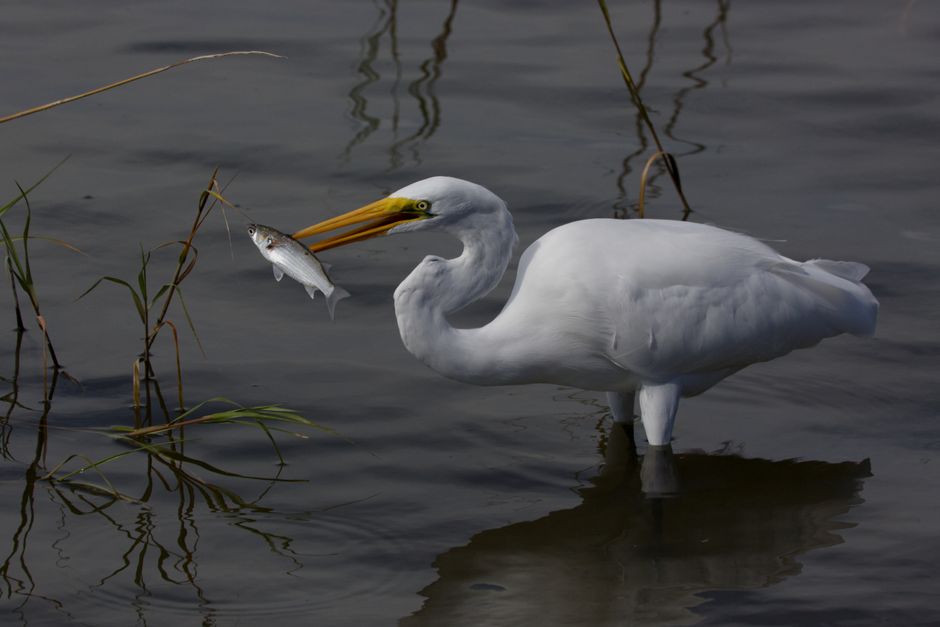
The great white heron hunts by standing motionless in shallow water or stalking slowly across tidal flats before striking prey with a lightning-fast neck extension. Its strike unfolds in a fraction of a second, spearing or grabbing unsuspecting marine life with lethal precision.
Patience plays the largest role in their hunting strategy. A heron may freeze in place for many minutes, staring into the water to calculate the exact angle of light refraction. Specialized vertebrae in their long necks allow them to coil and snap their heads forward like a coiled spring. The sheer force of this strike can stun large fish immediately.
While standard wading birds focus primarily on minnows and small mullets, this bird targets much larger prey. Their sharp beak allows them to grasp slippery fish, thrashing crabs, and even small vertebrates that cross their path. In Florida's rich coastal ecosystem, these birds sometimes even hunt baby alligators that wander into brackish waterways, proving just how capable they are as apex avian predators. Similar to other predatory threats covered in our guide on Burmese pythons in Florida, native wildlife must constantly balance hunting with survival in these crowded subtropical waters.
What Do Great White Herons Eat in the Wild?
The great white heron consumes a carnivorous diet dominated by marine fish, crabs, shrimp, frogs, lizards, rodents, and occasional hatchling reptiles. They are opportunistic feeders that will swallow almost any animal small enough to fit down their gullet.
Saltwater fish make up the majority of their daily intake. They regularly catch mullet, needlefish, pinfish, and small rays along the tidal flats. Once a fish is caught, the heron tosses it in the air to reposition it head-first, sliding the prey down its throat to prevent spiny fins from causing injury.
When marine prey is scarce, they shift their attention to shoreline scrub and dry ground. They will catch marsh rabbits, small snakes, and nesting shorebird chicks. Their adaptability in finding food allows them to survive seasonal changes in water levels and tidal shifts throughout the Florida coast.
What Are the Mating and Nesting Habits of White Herons?
Great white herons breed year-round, performing elaborate courtship displays that include neck stretching, bill clacking, feather fluffing, and mutual twig displays to secure a mate. Once a bond forms, the pair works together to construct a large, flat nest platform out of sticks in the branches of red mangroves.
Nesting sites are carefully chosen to protect future chicks from ground predators. By building high in mangrove branches directly over open water, the birds make it difficult for land mammals to reach their eggs. The female typically lays two to four pale blue eggs, and both parents take turns incubating them for about four weeks.
Parental care is demanding and vocal. Newly hatched chicks compete fiercely for meals, grabbing their parents' bills to trigger food regurgitation. Both adults fly out across the flats several times each day to gather fish, returning to shelter the young from harsh subtropical sun and sudden tropical storms. Chicks remain in the nest for over two months before fledging and learning to hunt on their own.
Can You Keep a Great White Heron as a Pet?
No, you cannot keep a great white heron as a pet because it is strictly protected under federal and state wildlife laws, including the Migratory Bird Treaty Act. It is completely illegal to trap, own, buy, or trade this native bird or its eggs in the United States.
Beyond the legal restrictions, large wading birds are impossible to care for properly in a domestic home. They require huge expanses of open water, dozens of fresh live fish every single day, and massive territory to fly and forage. Keeping a wild bird in a backyard enclosure causes extreme physical stress, malnutrition, and dangerous feather wear.
Responsible bird care starts with respecting an animal's natural needs. Pet parents interested in birds should always research captive-bred, domesticated companion species instead, and consult an exotic animal veterinarian whenever planning a bird habitat. If you ever find an injured wild heron tangled in fishing line or struggling on a beach, never take it home. Contact a licensed local wildlife rehabilitator who has the training and medical equipment needed to treat native birds safely.
What Challenges Do These Herons Face in Florida?
Great white herons face major survival challenges from coastal development, hurricane activity, contaminated runoff, and discarded fishing tackle. Because their breeding territory is so concentrated in the Florida Keys, localized disasters can cause significant drops in their regional population.
Human activity along the coastline remains a constant pressure. Fast-moving boats disturb feeding herons on shallow flats, forcing them to burn valuable energy fleeing instead of hunting. Monofilament fishing line is another severe hazard, as herons frequently get tangled in discarded line near popular fishing piers.
Fortunately, dedicated habitat protection efforts are helping to safeguard critical mangrove keys and shallow feeding flats. You can read about how targeted legal protections and habitat restoration help rare animals rebound in our guide on wildlife conservation success stories. Simple actions can help protect them:
- Follow posted idle-speed zones when boating near shallow mudflats and mangrove islands.
- Never leave discarded fishing line, hooks, or lead weights near the water.
- Keep pet dogs on leashes when visiting coastal beaches and wildlife refuges.
- Never attempt to feed wild herons from docks, which encourages dangerous begging behaviors.
Final Thoughts
The great white heron is a true marvel of the Florida coastline, combining extraordinary striking speed with incredible survival instincts. Protecting their shallow feeding grounds and mangrove sanctuaries ensures these magnificent white birds will remain a fixture of our coastal waters for generations to come. Explore our other RarePetCare guides to learn more about exotic birds, wildlife facts, and responsible pet ownership.
Frequently Asked Questions
Where does the great white heron live?
Great white herons live almost exclusively in coastal areas of South Florida, the Florida Keys, and select Caribbean islands, preferring shallow saltwater mudflats and mangrove estuaries.
Is the great white heron the same as a great blue heron?
Yes, scientists classify the great white heron as a white color morph or regional subspecies of the great blue heron rather than a separate biological species.
How fast does a great white heron strike?
A great white heron strikes in a split second, snapping its specialized neck vertebrae forward faster than most prey animals can register or evade.
What should you do if you find an injured white heron?
You should immediately contact a licensed wildlife rehabilitation facility or state wildlife agency, as these protected birds require specialized professional medical care.
Explore More Birds Guides
 🦜Birds
Why Is My Budgie Puffed Up? Causes and Next Steps
Discover why budgies puff up their feathers, how to tell relaxed behavior from illness, and what to do if your bird feels unwell.
 🦜Birds
Bird Flu Backyard Feeders: Is It Safe to Feed Birds?
Feeding wild birds brings nature close, but bird flu risks at backyard stations mean pet parents must take precautions.
 🦜Birds
Wild Parrots of San Francisco: Rescue and Urban Life
A wild red-masked parakeet was freed by firefighters in San Francisco, showing the unique challenges feral parrot flocks face in the city.