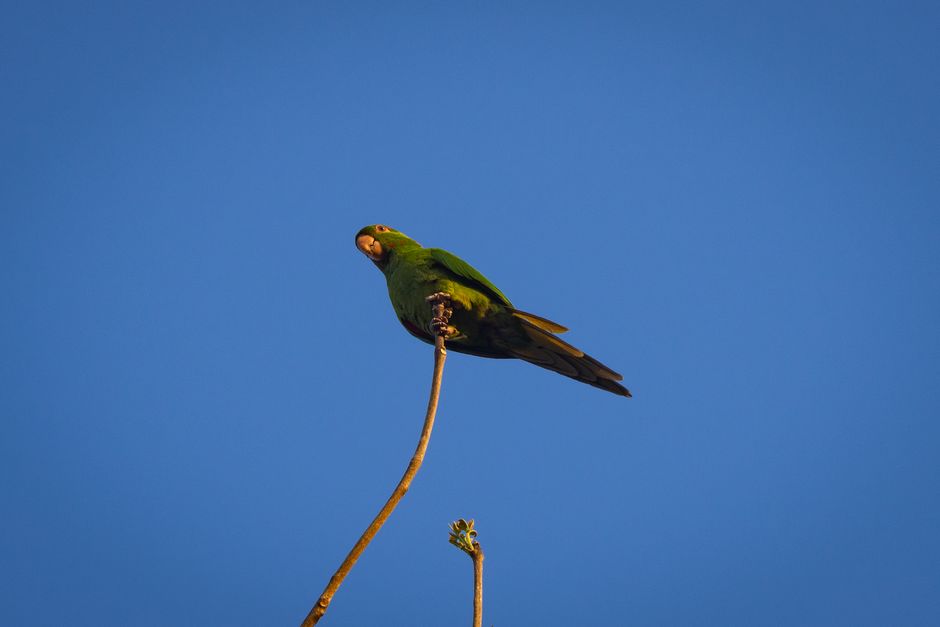
How Far Can a Lost Parrot Fly? Distance and Survival
A lost pet bird can travel surprising distances within hours of slipping out an open door. If you are wondering how far can a lost parrot fly, healthy pet parrots can easily cover 15 to 50 miles in a single day, and some have traveled over 300 miles across weeks when caught in strong wind currents. Even indoor companion birds retain powerful flight instincts once outdoor panic takes over.
The thought of an escaped bird is every owner's worst nightmare. In one incredible Canadian case, a blue Indian Ringneck named Bleu slipped past her family through a Saskatchewan garage door. After circling overhead in quick victory laps, she vanished into the open sky. Exactly one month later, a resident captured a blue parrot over 500 kilometers (more than 300 miles) to the north. Pet parrots are far more resilient and capable of distance than most owners expect, which means you should never give up hope during a search.
How Far Can a Lost Parrot Fly in 24 to 48 Hours?
A lost parrot can travel between 5 and 30 miles in the first 24 to 48 hours depending on wind speed, predator pressure, and flight conditioning. When a companion bird first escapes, adrenaline and confusion often carry it much farther than it flies inside your living room.
Most pet birds do not intend to fly away forever. Instead, they get spooked by a sudden sound, take flight, and catch an updraft that lifts them above familiar landmarks. From high up, the world looks completely different to a bird that only knows the inside of your home. They cannot easily spot their favorite perch, patio door, or cage from high above the roofline.
As panic sets in, companion birds fly in wide circles or straight lines until exhaustion hits. A fully flighted bird that gets caught in high-altitude winds can cross county lines before nightfall. Understanding how flight mechanics and wing feathers work helps explain this sudden speed. You can review our guide on cockatiel anatomy to learn how avian muscle structure and flight feathers generate lift with minimal energy output.
What Factors Influence How Far an Escaped Bird Can Travel?
Wind direction, physical stamina, flock instincts, and predator encounters directly determine how far a lost bird will travel after an escape. Some parrots land in the nearest tall tree just two houses away, while others keep moving until they find food or safety.
Weather plays the biggest role of all. Strong tailwinds can push a lightweight parakeet, conure, or ringneck many miles off course in under an hour. Rain and extreme heat will force birds down to seek shelter under building eaves or dense foliage, whereas calm, sunny mornings encourage continuous flight.
Predators like hawks, crows, and outdoor cats also keep lost birds moving. Wild birds frequently mob an unusual, brightly colored parrot. This mobbing forces the pet bird to flee repeatedly instead of settling down to rest, driving it miles away from the initial escape point.
Why Clipped Wings Do Not Stop Distance Flight
Many pet parents assume a bird with clipped wing feathers cannot fly away, but outdoor wind currents change the rules entirely. A gust of wind gives even a partially clipped bird enough lift to reach tall trees or travel downwind for hundreds of yards. Once in a tree, an escaped bird hops higher toward the canopy to feel secure, making ground recovery very difficult.
How Do Lost Pet Parrots Survive Outdoors?
Escaped pet parrots survive by foraging wild seeds, drinking standing water, and seeking high tree canopies to roost safely away from ground predators. Many companion birds successfully survive outdoors for weeks or months by adapting quickly to their environment.
Parrots are naturally intelligent problem-solvers. In suburban areas, they quickly locate backyard bird feeders, fruit trees, garden vegetables, and fresh water sources like birdbaths or puddles. Indian Ringnecks, Monk Parakeets, and various conures are especially hardy and have even established wild breeding colonies in non-native climates around the world.
However, outdoor survival is tough on domestic birds. They face sudden cold snaps, dehydration, and unfamiliar predators. Before adopting any companion bird, pet parents should carefully research the species' long-term physical and social needs. If you ever recover an escaped bird that shows signs of illness, exposure, or injury, consult an exotic-animal veterinarian immediately for an emergency exam.
What Should You Do Immediately When Your Parrot Escapes?
Act within the first ten minutes by staying in the escape area, calling your bird with familiar phrases, and placing its open cage outside with favorite treats inside. Immediate action before sunset offers the highest recovery rate.
- Place the familiar cage outside with fresh food, millet sprays, and clean water visible on top of the cage.
- Play recordings of your bird's favorite vocalizations, whistle tunes, or contact calls loudly on a portable speaker.
- Alert local neighbors, animal shelters, veterinary clinics, and wildlife rescues across a wide radius.
- Post clear photos and identifying details on local social media lost pet groups, neighborhood message boards, and national lost bird databases.
Remember that sudden fright can also happen indoors before an escape happens. Pet birds that panic at night often rush blindly toward open doors or windows the moment morning arrives. Learning how to manage issues like cockatiel night frights can keep your pet calm and prevent chaotic indoor flight incidents before they start.
Final Thoughts
Bleu's 500-kilometer journey proves that you should never stop searching, because knowing how far can a lost parrot fly reminds us that miracles happen hundreds of miles from home. Keep calling, keep posting alerts across neighboring towns, and check local shelters regularly. Explore our other RarePetCare guides to learn more practical tips for keeping your exotic pets healthy, safe, and thriving every single day.
Frequently Asked Questions
Can a lost pet parrot find its way back home?
Most pet parrots struggle to find their way home because rooftops and neighborhoods look unfamiliar from above, causing them to become disoriented quickly.
How long can a pet parrot survive outside alone?
A lost parrot can survive anywhere from a few days to several months outdoors, depending on weather conditions, access to fresh water, food sources, and local predators.
Do parrots fly toward voices when lost?
Yes, lost parrots often respond to their owner's voice or familiar whistle calls, but fear may keep them frozen high up in a tree until they feel secure enough to fly down.
What is the best time of day to search for a lost bird?
Dawn and dusk are the most effective times to search because parrots call out loudly during these hours to locate flock mates before feeding or roosting.
Explore More Birds Guides
 🦜Birds
Why Is My Budgie Puffed Up? Causes and Next Steps
Discover why budgies puff up their feathers, how to tell relaxed behavior from illness, and what to do if your bird feels unwell.
 🦜Birds
Bird Flu Backyard Feeders: Is It Safe to Feed Birds?
Feeding wild birds brings nature close, but bird flu risks at backyard stations mean pet parents must take precautions.
 🦜Birds
Wild Parrots of San Francisco: Rescue and Urban Life
A wild red-masked parakeet was freed by firefighters in San Francisco, showing the unique challenges feral parrot flocks face in the city.